🚀 Authoritative Space Exploration & Orbital Science Repository

MissionOrbit — Planetary Missions, Space Telescopes & Human Spaceflight

Comprehensive, peer-level technical documentation detailing lunar architectures, robotic Mars rovers, deep-space ion propulsion, cryogenic space observatories, and orbital flight systems under the editorial direction of Annamae Turner.

🌕
Moon Missions
Saturn V trajectories, AGC guidance, Artemis lunar architecture, and polar water ice prospecting.
Explore Lunar Missions →
🔴
Mars Missions
EDL Sky Crane dynamics, Curiosity & Perseverance rovers, Jezero geology, and Sample Return.
Explore Mars Missions →
🔭
Space Telescopes
Hubble optics, JWST beryllium segment actuation, exoplanet spectroscopy, and Roman / HWO.
Explore Observatories →
🛰️
Robotic Missions
Voyager interstellar crossings, Cassini Saturn exploration, asteroid sample returns, and ion drives.
Explore Robotic Probes →
👨‍🚀
Human Spaceflight
ISS life support systems, Space Shuttle TPS tile dynamics, EVA spacesuit biomechanics, and space medicine.
Explore Manned Flight →

How NASA’s OSIRIS-REx Brought an Asteroid Sample Back to Earth
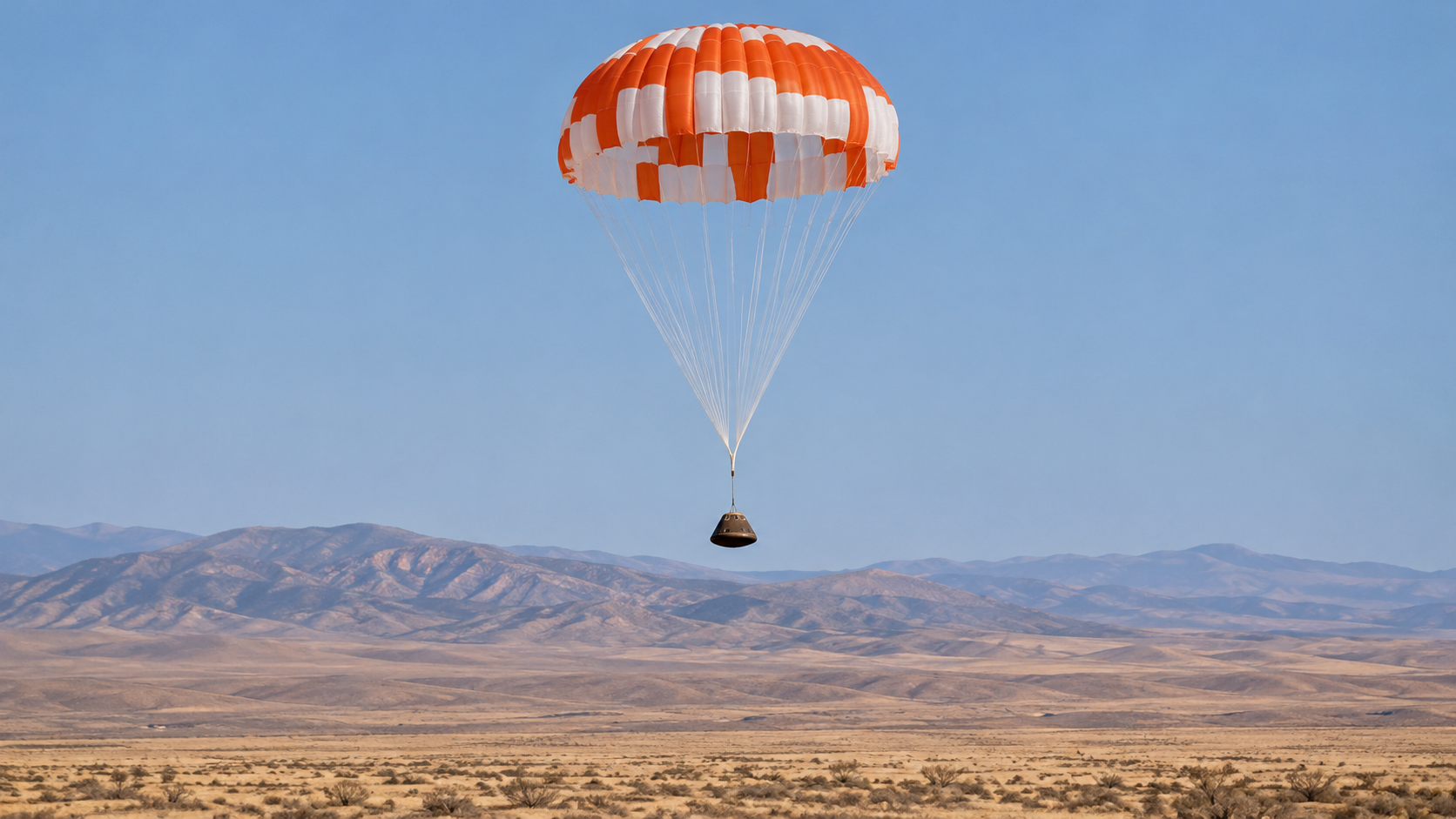
OSIRIS-REx Mission Guide Space Exploration Six seconds on an asteroid. Seven years from launch to landing. NASA’s OSIRIS-REx collected rock and dust from asteroid Bennu by briefly touching the surface and firing a burst of nitrogen gas. The spacecraft sealed the material inside a return capsule, carried it back to Earth, and released it on … Read more
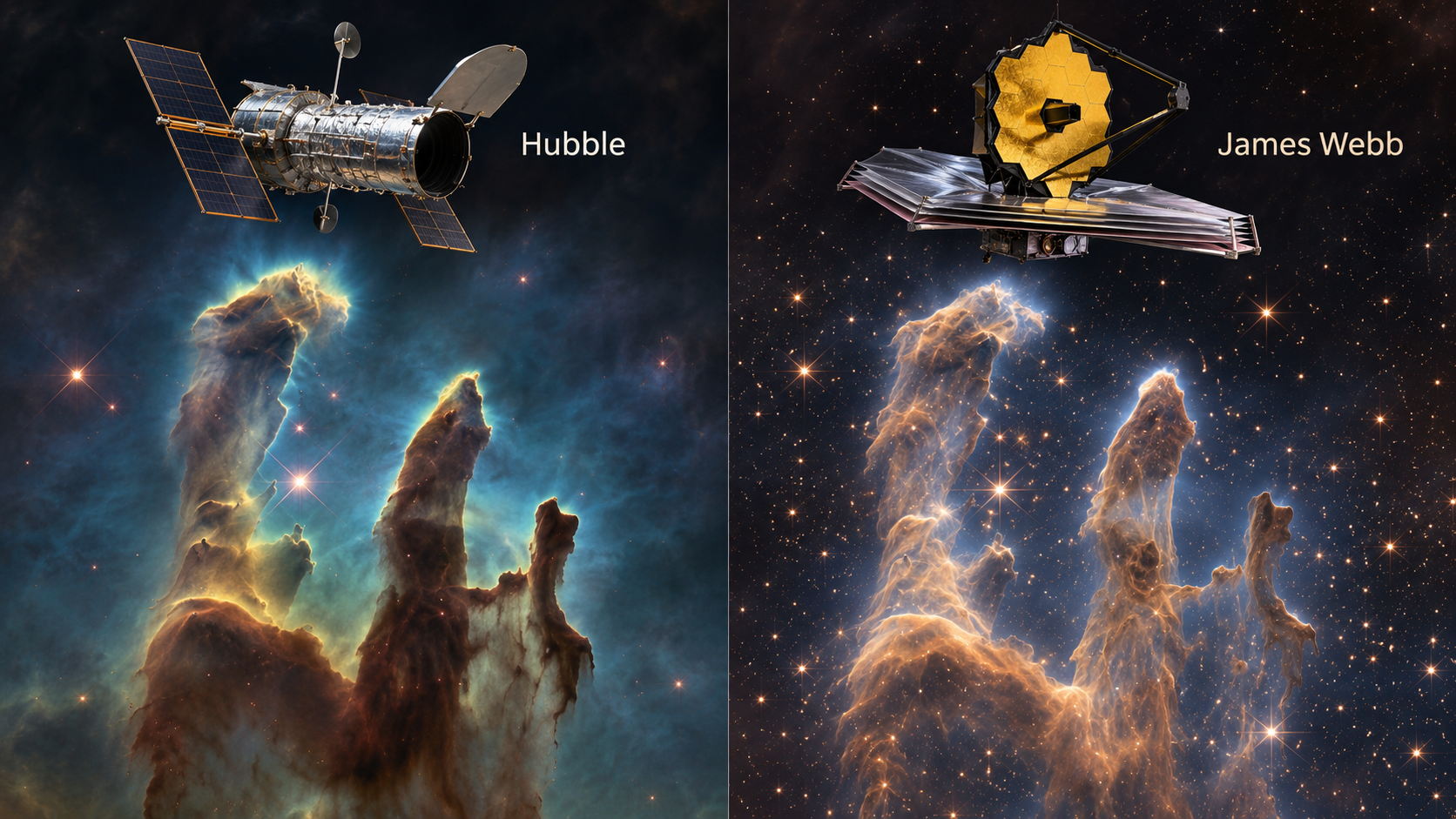
Hubble vs. James Webb What Each Telescope Can See

Hubble gives astronomers a view in ultraviolet, visible, and some near-infrared light. James Webb starts at the red edge of visible light and reaches much farther into the infrared. That difference helps explain why Hubble can map ultraviolet auroras on Jupiter while Webb can pick out stars forming inside dusty clouds. Point both telescopes at … Read more

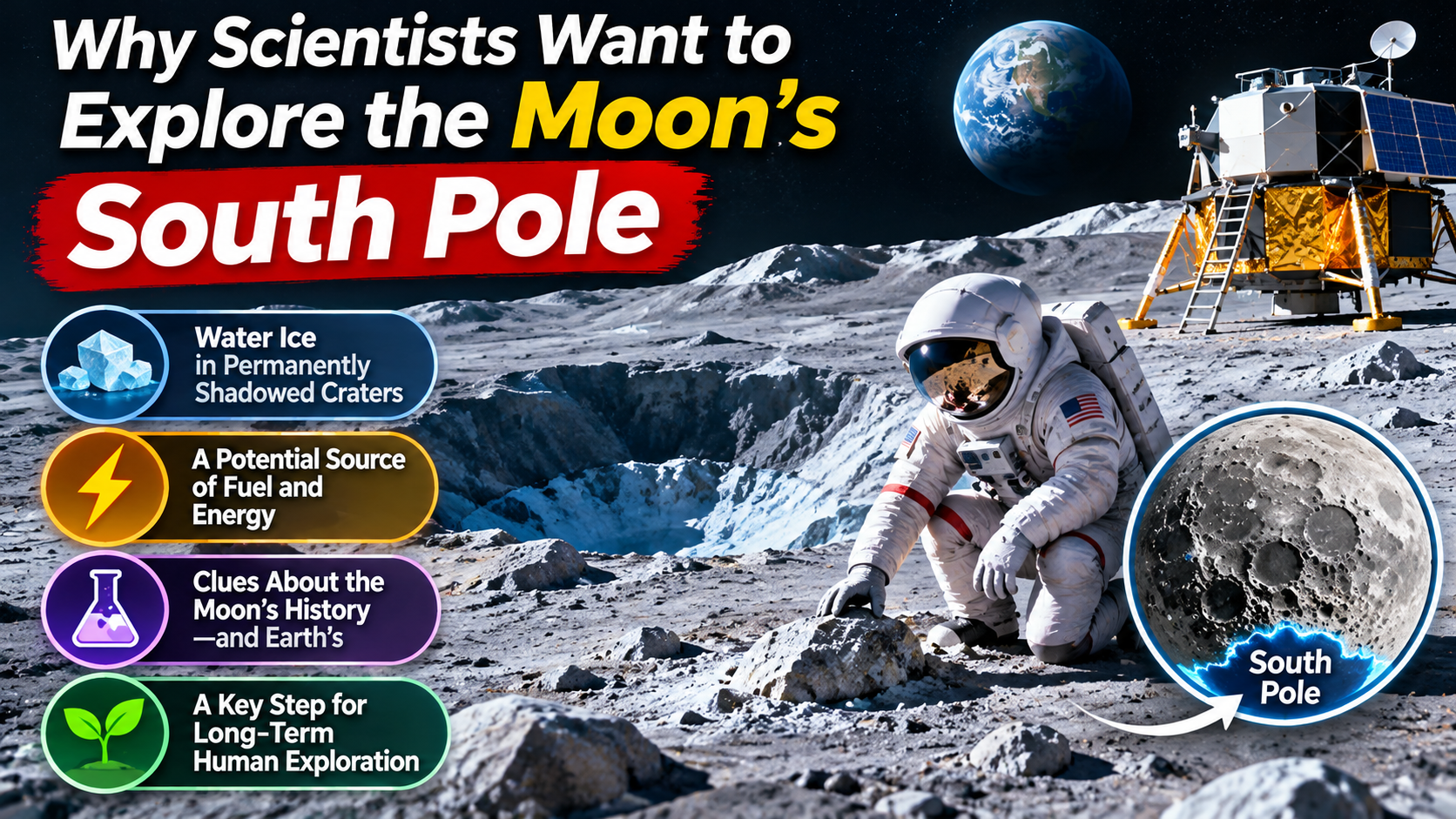
Why Scientists Want to Explore the Moon’s South Pole

Astronomy • Space Exploration For most of human history, the Moon has been a familiar object in the night sky. Its bright surface, changing phases, and unmistakable presence have inspired generations of observers. Yet one of its most scientifically fascinating regions remains largely beyond direct human experience: the rugged landscape surrounding its south pole. Unlike … Read more

How Coral Reefs Form The Partnership Between Coral Polyps and Algae

TROPICAL REEF RESEARCH ATLAS · MARINE ECOLOGY How Tiny Coral Animals Build Vast Underwater Reefs Discover the remarkable partnership between coral polyps and microscopic algae—and how it helps create some of the ocean’s most diverse ecosystems. CORAL POLYPS SYMBIOTIC ALGAE REEF FORMATION Coral reefs are among the most remarkable structures created by living organisms. Their … Read more

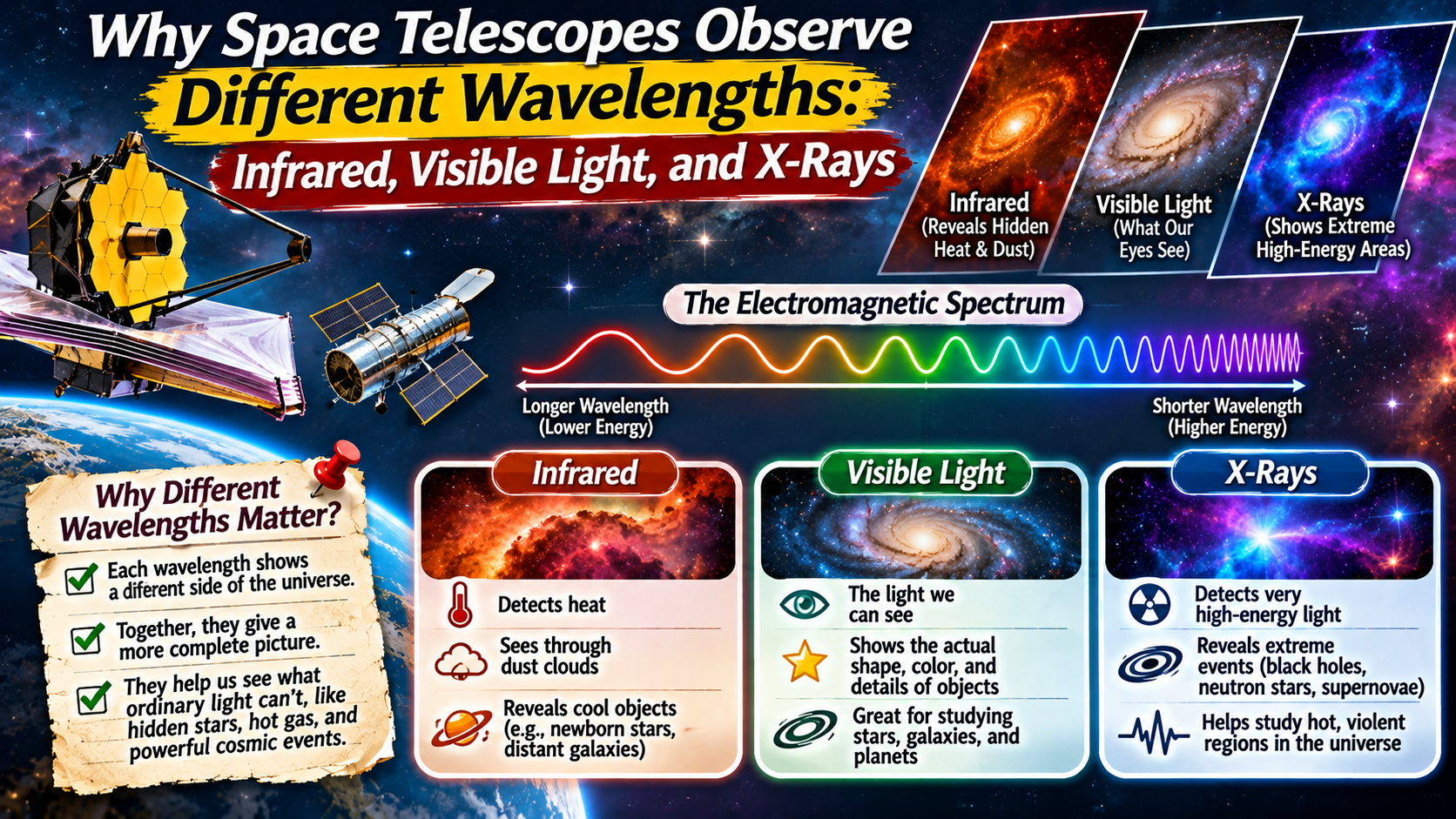
Why Space Telescopes Observe Different Wavelengths Infrared, Visible Light, and X-Rays

COSMIC OBSERVATORY · ASTRONOMY & SPACE SCIENCE One Universe, Many Kinds of Light Discover why astronomers use infrared, visible-light, and X-ray telescopes to reveal different parts of the cosmos. INFRARED VISIBLE LIGHT X-RAYS When people imagine a telescope, they often picture an instrument that collects visible light from distant stars and galaxies. But the universe … Read more

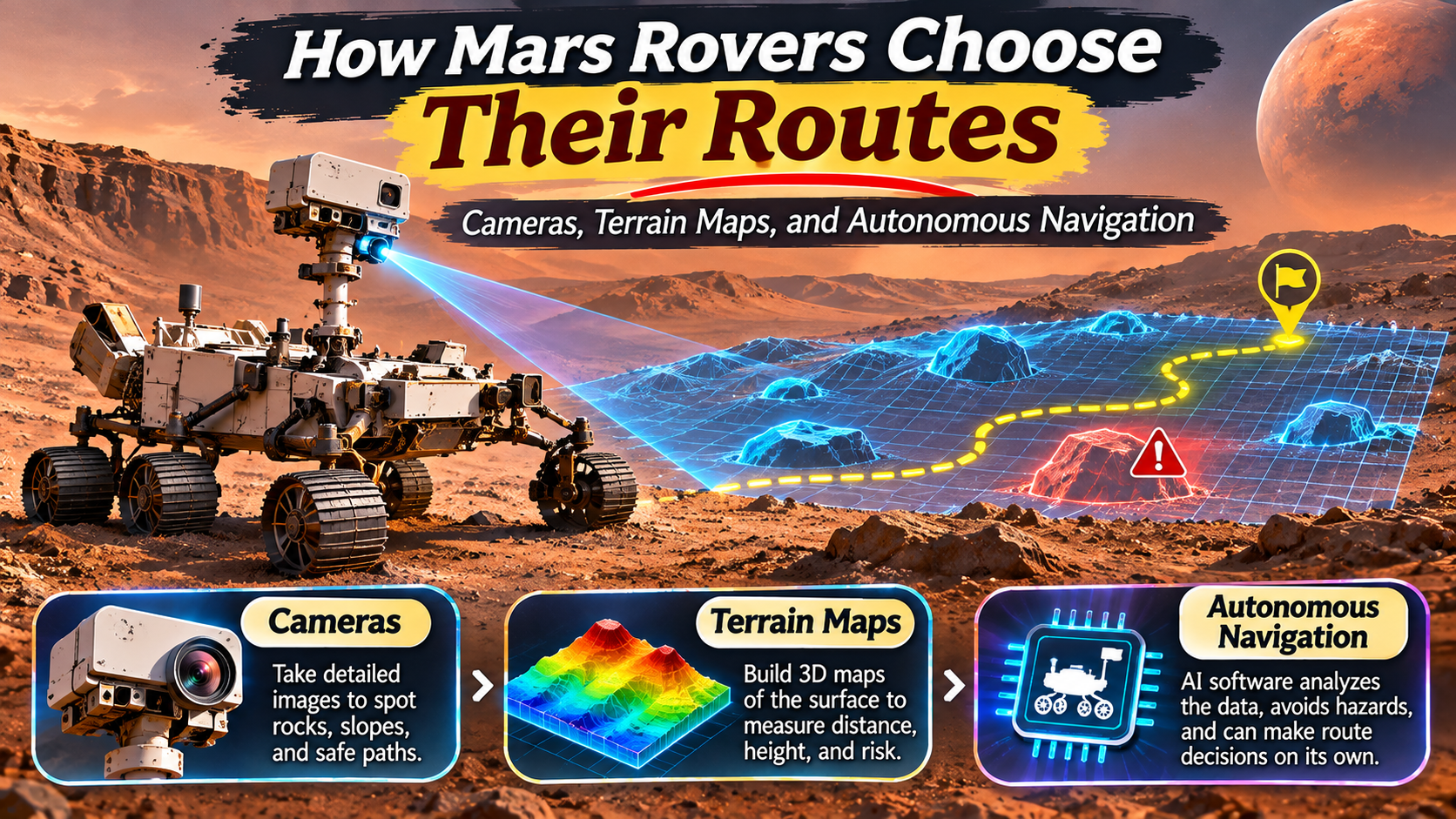
How Mars Rovers Choose Their Routes Cameras, Terrain Maps, and Autonomous Navigation

PLANETARY EXPLORATION / MISSION OPERATIONS MARS SURFACE OPERATIONS How a Robot Finds Its Way Across Another Planet Explore how cameras, orbital maps, engineering teams, and autonomous navigation software help Mars rovers travel safely across unfamiliar terrain. 01 / OBSERVE 02 / MAP 03 / PLAN 04 / DRIVE 05 / VERIFY Driving across Mars is … Read more

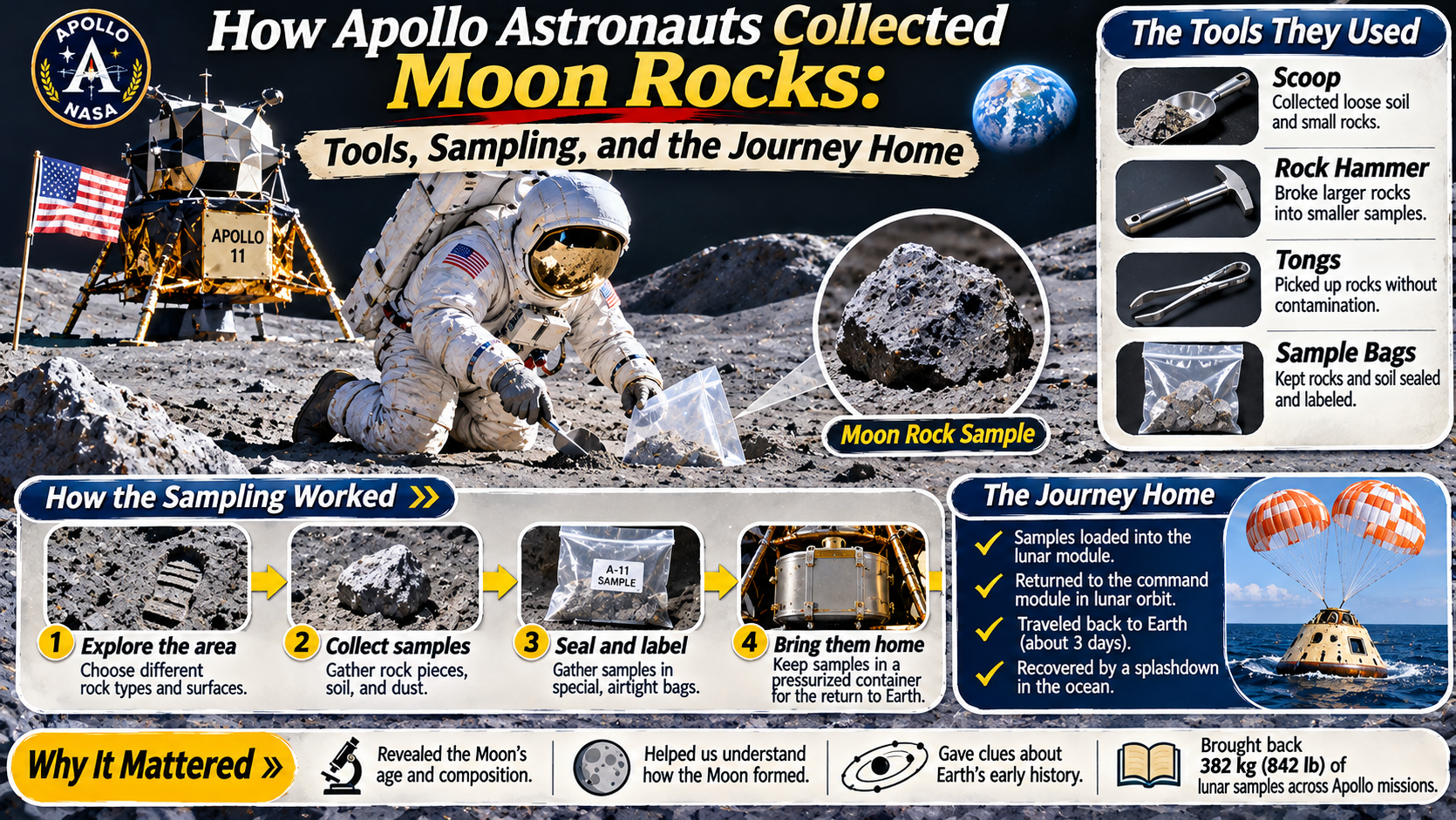
How Apollo Astronauts Collected Moon Rocks Tools, Sampling, and the Journey Home

APOLLO LUNAR ARCHIVE / PLANETARY EXPLORATION Bringing Pieces of the Moon Back to Earth How Apollo astronauts gathered lunar rocks and soil, protected their scientific samples, and transported them across nearly 240,000 miles of space. LUNAR GEOLOGY APOLLO MISSIONS SAMPLE RETURN When Apollo astronauts stepped onto the Moon, their mission involved far more than planting … Read more

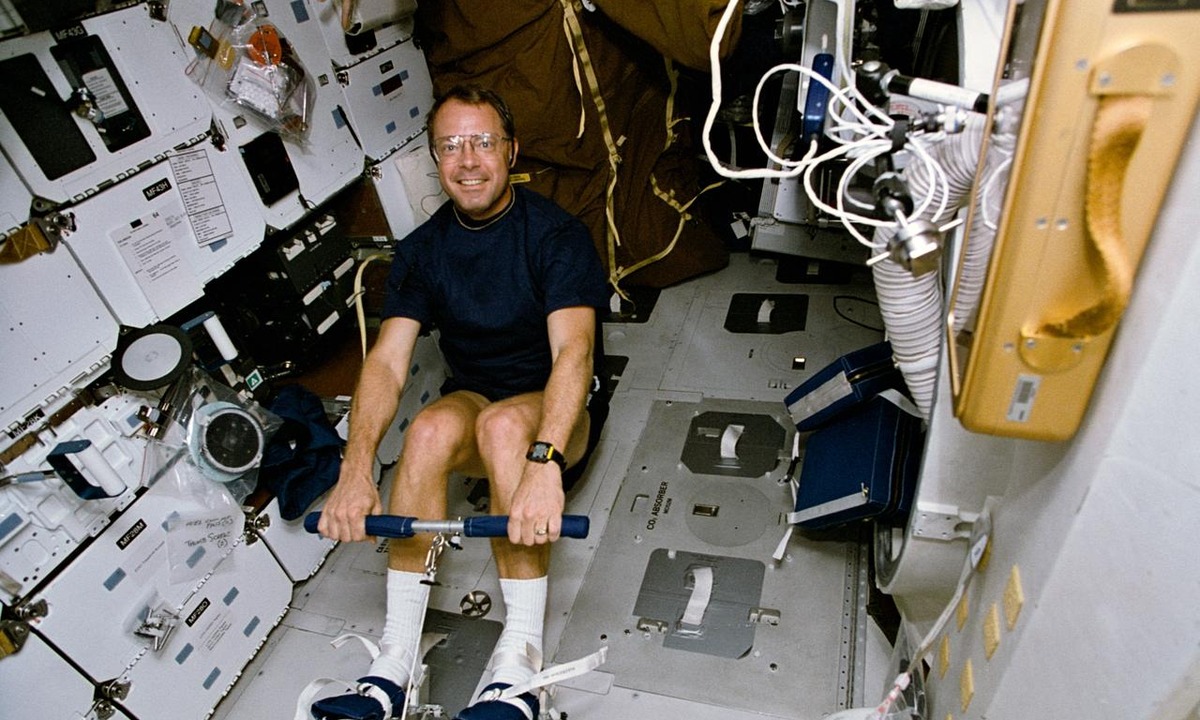
Long-Duration Spaceflight Human Physiology: Skeletal Calcium Depletion, Cephalad Fluid Shifts, Radiation Exposure, and Countermeasure Exercise

🚀 Human Spaceflight Systems: Long-Duration Spaceflight Human Physiology This technical monograph evaluates manned orbital station architecture, life-support chemical engineering, reusable spacecraft aerothermodynamics, spacesuit biomechanics, and space medicine under the editorial leadership of Annamae Turner. The Unnatural State: Evolutionary Biology in Zero Gravity For nearly four billion years, every organism on Earth—from single-celled protozoa to dinosaurs … Read more

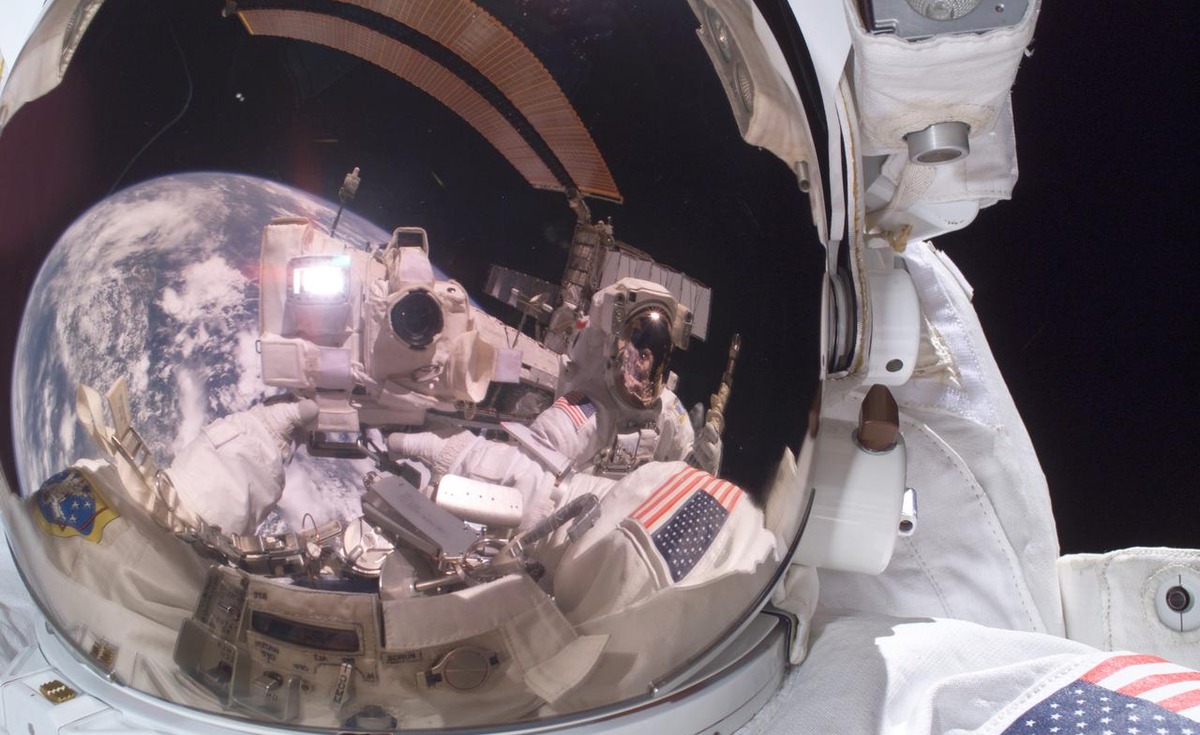
Extravehicular Activity (EVA) Spacesuit Biomechanics: Liquid Cooling Garments, Primary Life Support Subsystems (PLSS), and Spacewalk Ergonomics

🚀 Human Spaceflight Systems: Extravehicular Activity (EVA) Spacesuit Biomechanics This technical monograph evaluates manned orbital station architecture, life-support chemical engineering, reusable spacecraft aerothermodynamics, spacesuit biomechanics, and space medicine under the editorial leadership of Annamae Turner. The Spacesuit as an Anthropomorphic Spacecraft: The Lethal Vacuum of Space Stepping outside a pressurized spacecraft into the vacuum of … Read more